
What it takes to sustain place-based systems change

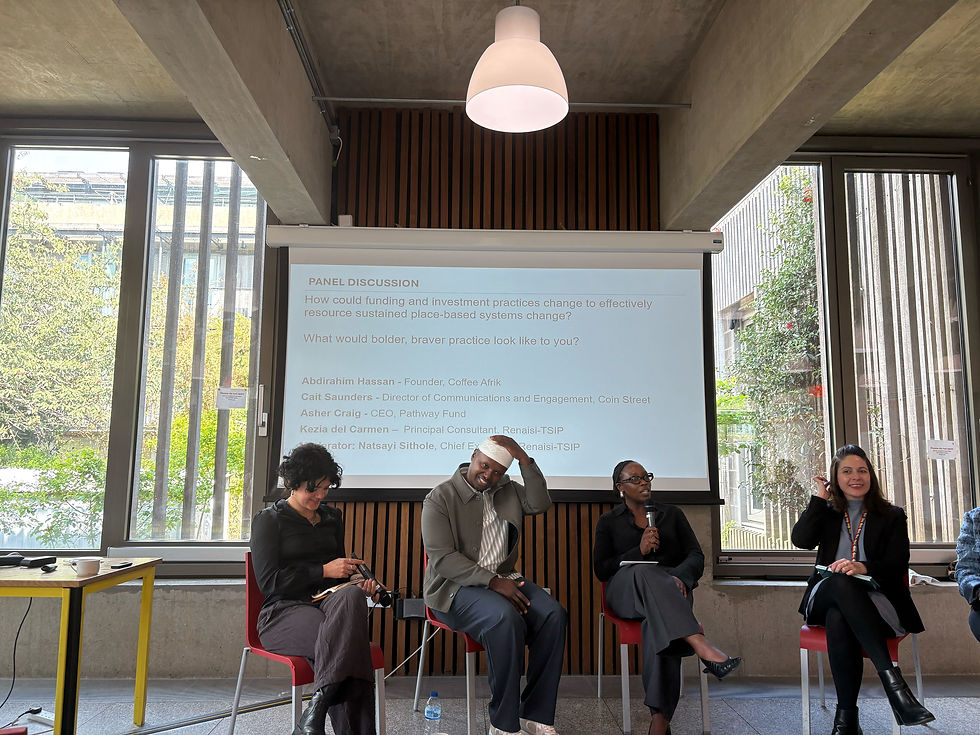
Right to Succeed’s Tamara Gilbert and Karen Jeremiah recently attended a Renaisi TSIP conference, where the fellow place-based change organisation launched the findings of its sustaining place-based systems change inquiry.
The conference explored a question that is central to place-based work across the country: what does it take to sustain long-term systems change in communities?
At Right to Succeed, our work is rooted in long-term, place-based partnership. We work alongside communities, services and local leaders to improve outcomes for children and young people through community-led collaboration.
As we approach the Resilient Communities phase of North Birkenhead’s Cradle to Career programme, these findings offer a timely opportunity to reflect on what helps place-based change survive beyond the life of funding and what doesn’t!
The challenge is the system around the work
Speakers highlighted that place-based systems change is long-term work.
It often takes 10 to 20 years or more to see deep and lasting change. Yet funding and accountability systems are still commonly built around much shorter timeframes (two - five years). This creates instability, interrupts momentum and can make it harder for places to hold on to trust, relationships and shared purpose.
The conference was also clear that funding should not limit the ambition of a place. Communities often have bold and imaginative visions for their future, but funding can cap ambition at what feels safe, measurable and achievable in the short term.
And there was a strong call to move away from deficit-based models that require communities to prove how broken things are in order to secure support, instead moving towards investment in local strengths, vision and possibility.
Learning should support place-based change, not just compliance
Too often, evaluation is shaped by pressure to show short-term success. When future funding depends on immediate impact, there is less room for honesty about what is not working and less opportunity to test and learn. Speakers challenged this approach, arguing that learning should be a tool for change, not a compliance exercise.
There was strong support for more ongoing, local feedback led by the people closest to the work. That means placing greater value on qualitative evidence, lived experience and practitioner insight, alongside formal data. In systems change work, some of the most important shifts may not be visible for several years. The approaches to learning and evidence need to reflect that reality.
Participation is not the same as power
Participation alone is not the same as decision-making power. While communities are often consulted, real authority over resources, priorities and definitions of success can still sit elsewhere. A consistent message from the day was that those closest to the work should have a stronger role in shaping decisions at place level.
While power often sits outside communities, risk is pushed onto communities and local delivery partners. That includes financial risk, delivery risk and social or relational risk. Communities invest time, trust and credibility and they often carry the impact when initiatives end or priorities shift.
The conference challenged organisations and funders alike to ask who carries the consequences when things don’t go to plan and how that risk can be shared more fairly across the system?
Relationships are core infrastructure
For us, one of the strongest messages was that relationships are not a “nice to have” but are core infrastructure.
Place-based systems change depends on trust, collaboration, coordination and shared ownership. Yet these foundations are often under-recognised and underfunded. Too often, systems fund activity without funding the conditions that make that activity stick.
The conference reinforced the importance of investing in backbone functions such as relationship-building, coordination, shared infrastructure, strategic alignment and learning.
This is especially relevant to North Birkenhead’s Resilient Communities work and has been essential throughout delivery of Cradle to Career.
We provide backbone as core infrastructure, prioritising the conditions for sustainability and valuing the local relationships and collaborative working that make change possible.

Strategic questions for Resilient Communities
As a whole, the conference raised a set of important strategic questions for place-based resilience:
How do we make backbone functions more visible and investable to funders?
How do we ensure risk is not disproportionately held by communities in our models?
What could a credible long-term 10 to 15 year narrative look like for places such as North Birkenhead?
How do we balance local variation and ownership with consistency and quality across places?
A shared challenge
There is growing agreement across funders, practitioners and policy voices about what is needed to sustain place-based change. The challenge now is whether systems, behaviours and funding models can shift to support that reality.
For Right to Succeed, Renaisi’s research findings feel like both confirmation and challenge: confirmation that long-term, relational, community-led work matters; challenge to keep strengthening the conditions that will allow that work to last.


